
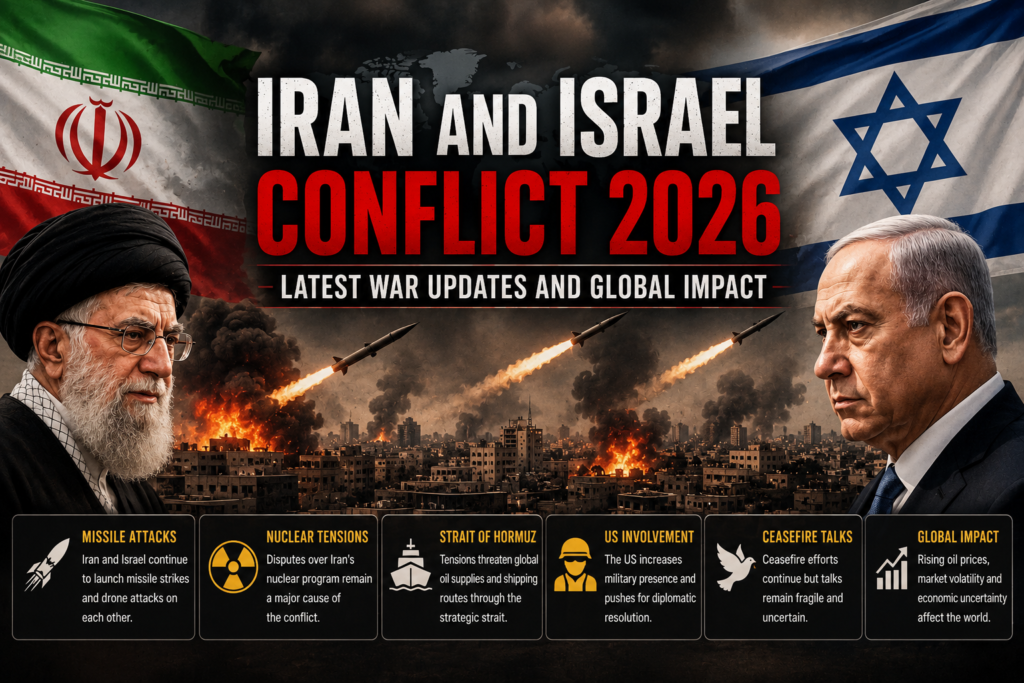
Iran-Israel Conflict 2026: Latest War Updates and Global Impact
The ongoing conflict between Iran and Israel has become one of the most serious geopolitical crises of 2026. Rising military tensions, missile attacks, naval confrontations, and diplomatic breakdowns have pushed the Middle East into instability. The war has also affected oil prices, global trade, and international relations, making it a major concern for countries around the world.
According to recent international reports, the conflict intensified after failed negotiations over Iran’s nuclear program and growing military tensions in the region. Since February 2026, both sides have exchanged attacks, while the United States has also become deeply involved in the crisis.
How the Iran-Israel Conflict Started
The roots of the Iran-Israel conflict go back decades. Israel has long accused Iran of developing nuclear weapons and supporting armed groups across the Middle East. Iran, meanwhile, has criticized Israeli military actions in the region and opposed Western influence in Middle Eastern politics.
In early 2026, diplomatic negotiations reportedly collapsed, leading to military escalation. Reports suggest that American and Israeli operations targeted Iranian military and nuclear facilities, after which Iran launched retaliatory missile strikes toward Israeli territories.
The conflict quickly expanded beyond direct missile exchanges. Strategic waterways, oil routes, and neighboring countries also became affected, increasing fears of a wider regional war.
Missile Attacks and Military Escalation
One of the biggest developments in the conflict has been the large-scale missile and drone attacks. Iran reportedly launched several waves of missiles targeting Israeli cities and military infrastructure. Israeli air defense systems intercepted many projectiles, but some attacks caused casualties and damage.
Israeli forces responded with airstrikes on Iranian military facilities and strategic sites. Reports also mention attacks involving drones and naval forces in the Persian Gulf region. Military experts believe the conflict has entered a highly dangerous phase because both countries possess advanced missile technology and powerful defense systems.
The situation became even more tense when clashes expanded into maritime zones around the Strait of Hormuz, a globally important oil shipping route.
Strait of Hormuz Crisis
The Strait of Hormuz is one of the world’s most important oil transit routes. Nearly 20% of global oil shipments pass through this narrow waterway. During the conflict, Iran warned foreign ships and military forces operating near the region, creating major concerns in global energy markets.
Several international reports stated that shipping activity in the area slowed significantly due to security fears. Oil prices surged because traders worried that a prolonged blockade or naval conflict could disrupt global energy supplies.
Experts say the Strait of Hormuz crisis could affect fuel prices, transportation costs, food supply chains, and inflation worldwide. Countries dependent on Middle Eastern oil have been closely monitoring developments.
The Iran-Israel Conflict 2026 has become one of the most discussed global crises, with rising military tensions, missile attacks, and international diplomatic pressure. Experts believe the Iran-Israel Conflict 2026 could significantly affect oil prices, global trade routes, and Middle East stability. As the Iran-Israel Conflict 2026 continues to escalate, countries around the world are closely monitoring developments and urging peace talks. Recent updates from the Iran-Israel Conflict 2026 show growing concerns about regional security, nuclear tensions, and economic uncertainty. Many analysts say the Iran-Israel Conflict 2026 may reshape international relations and global geopolitical strategies in the coming months.
Role of the United States
The United States has played a central role in the conflict. American military forces increased their presence in the Gulf region, while diplomatic efforts attempted to negotiate a ceasefire between Iran and Israel.
Recent reports indicate that U.S. peace proposals were rejected by Iran because of disagreements over sanctions, uranium enrichment, and control of strategic waterways. Former President Donald Trump reportedly described Iran’s response as “totally unacceptable,” further increasing tensions.
At the same time, Washington has emphasized protecting international shipping routes and supporting Israeli security. Analysts believe American involvement has transformed the crisis from a regional conflict into a major global security issue.
The Iran and Israel conflict has become one of the biggest international crises of 2026, with rising military tensions and global diplomatic concern. Many countries are closely watching the Iran and Israel conflict because it could affect oil prices, regional stability, and international trade.
Nuclear Program Dispute
The Iranian nuclear program remains one of the main reasons behind the conflict. Israel and Western countries argue that Iran’s uranium enrichment activities could eventually help develop nuclear weapons. Iran denies these allegations and says its nuclear program is intended for peaceful purposes.
Israeli Prime Minister Benjamin Netanyahu recently stated that the conflict cannot truly end until Iran removes or reduces its enriched uranium stockpiles.
Reports from international agencies suggest that Iran possesses significant quantities of enriched uranium, leading to fears about future nuclear escalation. The issue continues to dominate peace negotiations and international diplomacy.
The Iran and Israel conflict has created major tensions across the Middle East and increased global security concerns. Many countries are monitoring the Iran and Israel conflict because it may affect oil prices, trade routes, and international relations.
Experts believe the Iran and Israel conflict could become one of the most important geopolitical crises of 2026. The ongoing Iran and Israel conflict has already impacted global markets and raised fears of a wider regional war.
Recent missile attacks in the Iran and Israel conflict have increased pressure on world leaders to support ceasefire talks and diplomatic negotiations. As the Iran and Israel conflict continues, international organizations are calling for peace and stability in the region.
Economic Impact on the World
The Iran-Israel war has already started affecting the global economy. Rising oil prices have increased transportation and production costs in many countries. Investors are worried about disruptions in energy supply chains and instability in financial markets.
Countries importing oil from the Middle East could face higher fuel prices and inflation if the crisis continues. Airlines, shipping companies, and manufacturing industries are also closely monitoring developments.
Financial analysts believe prolonged conflict could slow global economic growth, especially if major trade routes remain unstable.
Impact on Middle Eastern Countries
Neighboring countries are increasingly concerned that the conflict may spread across the region. Missile attacks, drone operations, and naval confrontations have already affected multiple areas in the Middle East.
Reports indicate that Lebanon, Iraq, Syria, and Gulf nations have experienced heightened security alerts due to fears of regional escalation. Some countries have strengthened air defenses and increased military readiness.
The involvement of groups allied with Iran has also raised fears that the war could expand into a multi-front conflict. Regional governments continue urging diplomatic solutions to prevent further violence.
The Iran-Israel Conflict 2026 continues to dominate international headlines as tensions in the Middle East increase rapidly. Experts say the Iran-Israel Conflict 2026 could have a major impact on global oil prices, trade routes, and regional stability. Recent military developments in the Iran-Israel Conflict 2026 have raised concerns among world leaders and international organizations. Many countries are now closely monitoring the Iran-Israel Conflict 2026 because of fears that the crisis could expand into a wider regional war. Diplomatic efforts related to the Iran-Israel Conflict 2026 are ongoing, but ceasefire talks remain uncertain and fragile. As the Iran-Israel Conflict 2026 continues, global attention remains focused on security, economic impact, and future peace negotiations.
Ceasefire Talks and Diplomatic Efforts
Despite ongoing fighting, international diplomatic efforts continue. The United States, European countries, and regional mediators have attempted to negotiate temporary ceasefires and peace proposals.
However, talks remain difficult because both Iran and Israel maintain strong positions on security, nuclear policy, and military operations. Reports suggest that recent ceasefire arrangements remain fragile and could collapse at any moment.
Global leaders have repeatedly called for restraint to avoid a larger war that could destabilize the entire Middle East.
Media Coverage and Global Attention
The Iran-Israel conflict has dominated international news coverage throughout 2026. Television networks, newspapers, and online platforms continue reporting live developments, military updates, and diplomatic reactions.
Social media has also played a major role in spreading real-time information, videos, and political commentary. However, experts warn that misinformation and propaganda have increased during the conflict, making fact-checking extremely important.
International organizations are monitoring humanitarian conditions, civilian casualties, and the potential impact on refugees and displaced populations.
- The Iran and Israel conflict continues to impact global politics and oil markets.
- Experts believe the Iran and Israel conflict could reshape Middle East diplomacy.
- The ongoing Iran and Israel conflict has increased tensions across the region.
- Global leaders are monitoring the Iran and Israel conflict closely .
Cyber Warfare and Internet Restrictions
Apart from traditional military operations, cyber warfare has become another important aspect of the conflict. Researchers reported large-scale internet disruptions and cyber operations linked to the crisis.
Iran reportedly experienced nationwide internet shutdowns during periods of heightened tension. Cybersecurity experts believe digital warfare now plays a major role in modern geopolitical conflicts, including intelligence gathering, communication disruption, and infrastructure targeting.
Future of the Iran-Israel Conflict
The future of the conflict remains uncertain. Some analysts believe diplomatic negotiations could eventually reduce tensions, while others warn that military escalation may continue if peace talks fail.
Key issues such as nuclear enrichment, sanctions, regional security, and maritime control remain unresolved. The involvement of global powers including the United States, Russia, and European countries further complicates the situation.
If the Strait of Hormuz crisis deepens or regional armed groups become more involved, the conflict could significantly impact the world economy and global security.

Conclusion
The Iran-Israel conflict of 2026 has become one of the most dangerous international crises in recent years. Missile attacks, nuclear tensions, oil route disruptions, and diplomatic failures have created serious concerns across the world.
As global leaders continue efforts to negotiate peace, millions of people remain affected by rising instability and economic uncertainty. The coming months will likely determine whether the crisis moves toward diplomacy or further military escalation.
The world is now closely watching developments in the Middle East, hoping that negotiations can prevent a wider regional war and restore stability to one of the most strategically important regions on Earth.

The Guardian

Reuters

The Times of India